
Habitat & Conservation
|
08/24/2026
Making Big Impacts for Quail in Texas
Improving land management practices boosts quail numbers for local landowners
by Gilbert Randolph
Related Articles


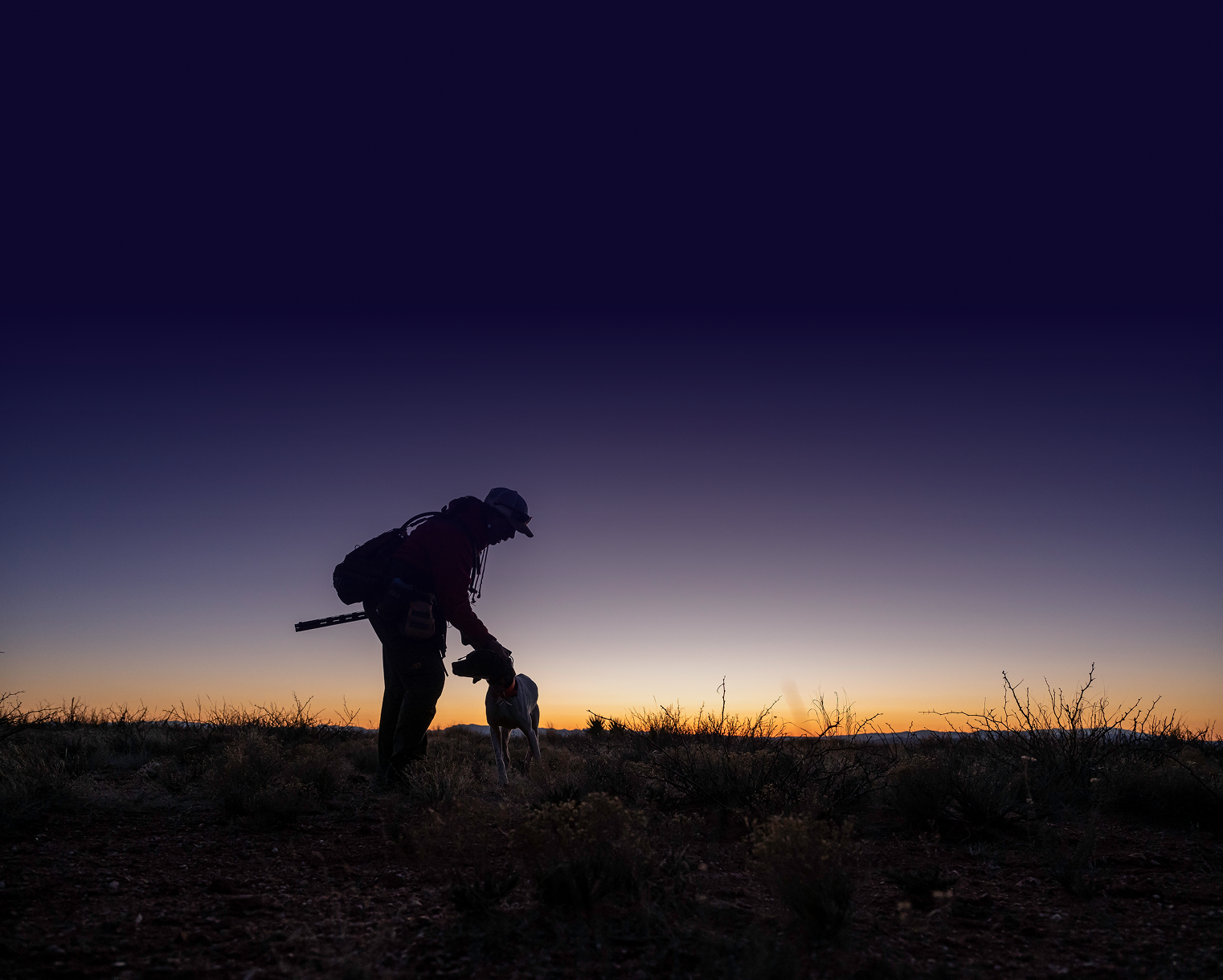
Eric Grahmann is a quail enthusiast. He uses his 33-acre property in Goliad County to train English Setters to upland bird hunt, especially bobwhite quail. He's not just passionate about upland hunting either. He’s invested in managing his land to better support the local quail population. Recently, he discovered something unusual, a quail nest with an astounding twenty-six eggs in it!
According to Dr. Fidel Hernandez at the Caeser Kleberg Wildlife Research Institute, the largest known quail nest observed in Texas was a nest with twenty-three eggs. With the nest on Grahmann’s property beating that by three eggs, it was an exciting find to say the least.

“These large nests are likely the work of multiple hens,” says Jocelyn Hernandez, who was able to observe the nest during an event on Grahmann’s property. “Northern Bobwhite quail are capable of producing multiple clutches per breeding season ranging from 12-16 eggs per clutch. These quail have such a high reproductive rate because they have a high mortality rate. Their average lifespan is only 6 months to a year, so they have to reproduce while they can. If a hen's nest is destroyed or depredated, and if environmental conditions and habitat are favorable, she will immediately start searching for a new nest site to lay her eggs. It is possible another hen or two laid eggs in this nest after the loss of their own.”
Grahmann believes that the work they’ve done on the property was a significant contributor to the increase in quail numbers that he’s observed on their land. When they first purchased the property, it had been chronically overgrazed and mowed, resulting in the property being dominated by Bermuda grass, old world bluestem, and undesirable woody shrubs like mesquite and huisache.
Grahmann began to change the land management approach, which included changing the disturbance patterns to allow native forbs, which were in the seedbank, to come back alongside reseeding native seeds. He also stopped fertilizing the Bermuda grass, which was dependent on mowing and fertilization to continue to do well. Alongside this, he began to practice what he called “targeted grazing,” which was both rotating his cattle through paddocks to allow for longer rest time and timing his grazing based on what plants were available seasonally. Additionally, he was able to time his grazing to help select which plants would go to seed or not. For grass species like brome, which he wants to control, this helps keep more aggressive species from dominating his pastures while still providing forage for his herd.

The woody shrubs were treated through grubbing, which uses mechanical equipment to remove the plants and through herbicide application via individual plant treatments. This process removes undesirable woody species that are causing problems and makes room for other woody and/or herbaceous cover that is more beneficial to quail.
Part of the work that Grahmann has done on his land has been through the Environmental Quality Incentives Program (EQIP). The United States Department of Agriculture’s Natural Resource Conservation Service (USDA’s NRCS) offer programs such as EQIP that help connect landowners with financial and technical assistance to implement conservation practices. For Grahmann’s land, establishing a permanent water source for his cattle and the brush management were the focus of his EQIP contract. These programs can also help landowners establish field and stream buffers, pollinator plots and a variety of other practices.

“I don’t have enough country to keep the population stable if there’s not more habitat.” Creating community buy-in for conservation practices like field borders and improved grazing strategies can go a long way in keeping quail on the landscape.
While Grahmann is excited about the growth in quail numbers on his property, he also emphasized the need for the broader adoption of quail-friendly ag practices in his community. Grahmann’s property and much of the quail range in Texas is part of the focal range for the USDA’s NRCS Working Lands for Wildlife Program (WLFW). The Working Lands for Wildlife partnership supports the USDA Natural Resources Conservation Service's premier approach for conserving America's working lands to benefit people, wildlife, and rural communities. Simply put, this gives landowners access to financial and technical assistance to keep their ag operations profitable while also working to benefit quail.
As of early July, Grahmann reported seeing a covey of around twenty whose age class would indicate that his record nest successfully hatched and the habitat on his property is providing them with cover and food.
To learn more about how conservation programs can benefit ag producers and landowners, contact a local NRCS service center or a Quail Forever biologist.
Your cart is empty