
Hunting & Heritage
|
08/26/2026
Restoring the Rise
Thomas Harris' Mission to Bring Bobwhites and Hope to Alabama's Black Belt.
by Ryan Sparks
Related Articles


On a still morning in Alabama's Black Belt, the dogs know before you do.
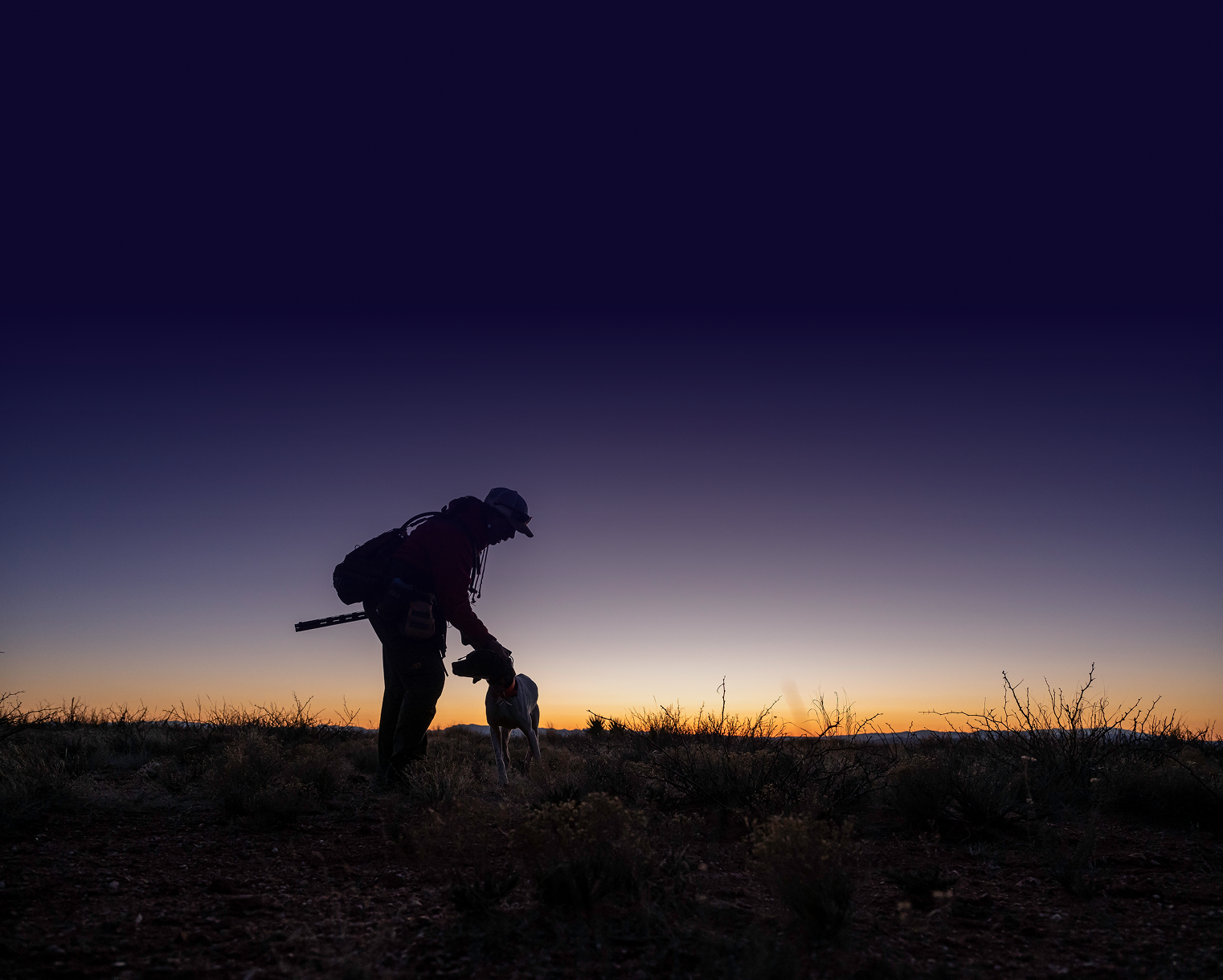
They tighten first – tails stiff, noses locked onto the magic scent. A quiet electricity flows through their muscles, instinct manifesting. Hunters ease forward. Boots tread through native grasses and shrubs that weren't here a generation ago.
And then it happens. A covey of bobwhites detonates from the ground – fifteen birds erupting at once, a sound that's part thunderclap, part memory.
"It's like 15 Porsches getting up at once."
For Harris, that moment – the covey rise – is the point.
Not the kill. Not a limit. The rise.
"It's the greatest moment in sports," he says. "Walking up into a covey behind a dog that you trained. There's nothing better to me."
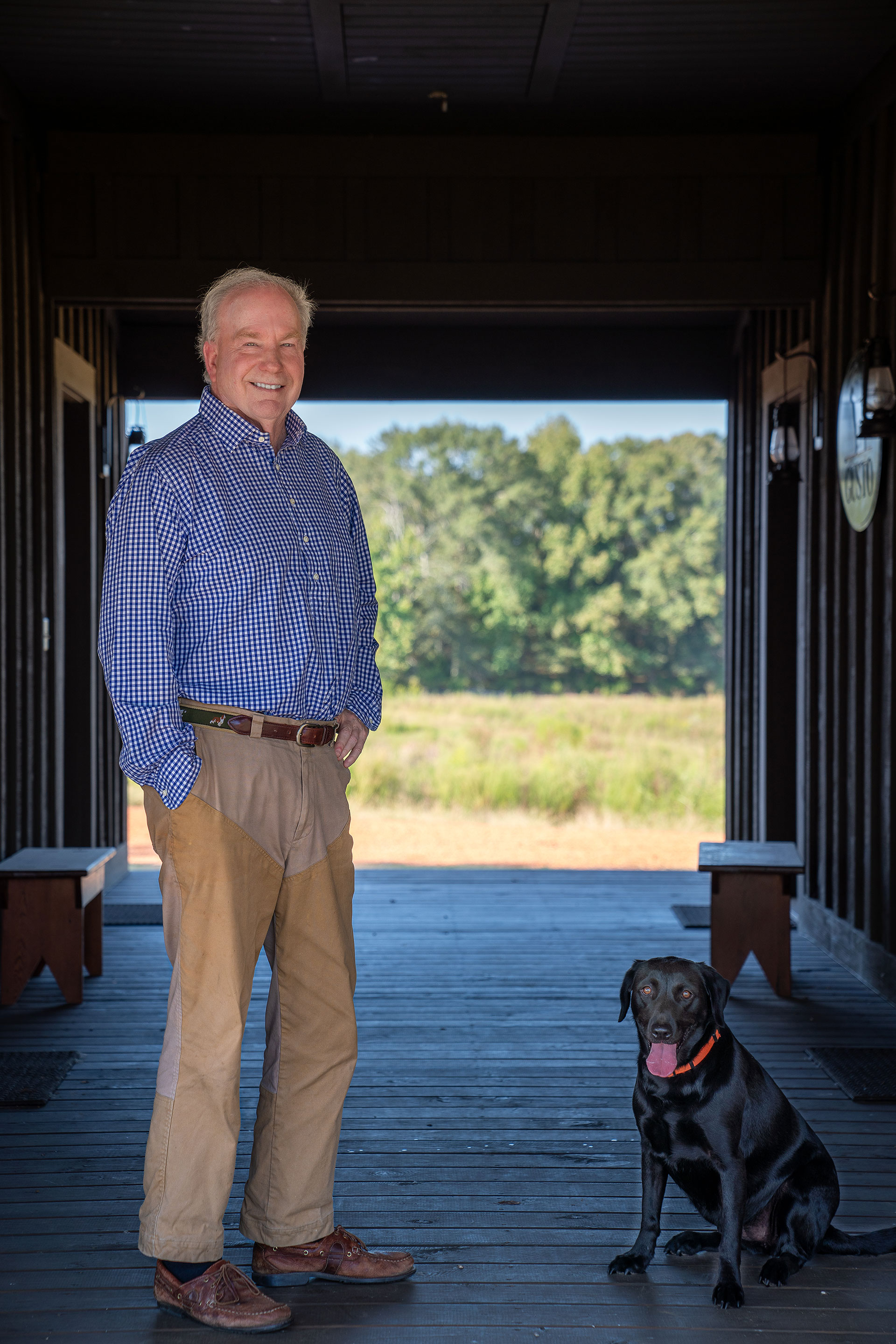
That simple, stubborn, and increasingly rare belief has shaped not just how Harris hunts, but how he's spent the better part of his life working to bring quail back to a place once defined by them: Alabama's Black Belt.
Named for its dark, fertile soil, the Alabama Black Belt rolls wide across central Alabama.
Long before modern agriculture reshaped it, this was a vast prairie of native grasses and scattered timber, a patchwork of disturbance and early successional habitat. Ideal quail country.
"It's always been here. It's always been the prairie," Harris says. "It's perfect for quail."
But like much of the bobwhite's historic range, the Black Belt changed. Hedgerows disappeared. Fence lines were erased. Native grasses gave way to monocultures. Brushy ditches were continually mowed. The messy edges, the places quail need, were remade by human actions.
"We used to hunt hedgerows," Harris remembers. "That's where the quail were… You just don't see those anymore."
What followed is a familiar story across the South: fewer birds, fewer hunters, less access, and a slow cultural drift away from the land.
But Harris never accepted that story as final.
"I love hope," he says with a grin when I asked if he thinks quail will ever return to their former numbers.
Harris' connection to quail didn't begin with conservation. It began, like it does for most, with family.
His earliest outdoor memories are of dove hunts that turned into something more.
"We'd go to pick up a downed bird, and we'd run into a covey of quail," he says. "It would just about scare our pants off."
Those explosions of birds, unexpected and electric, left a mark. So did the people.
His father introduced him to hunting. His family made it something larger.
"We would go hunt, and my mama would go to the stream and pick berries. It was a big family picnic," he remembers. "They'd bring fried chicken… deviled eggs… Coca-Cola. It was just a day in the woods. It couldn't have been any better."
There were birds everywhere then. Harris remembers seeing "15 to 20 coveys a day." Landowners welcomed hunters with a handshake and an understanding that they would treat their land with respect.
For Harris, part of that respect was an unwritten ethic that he continues to follow today.
"We wouldn't shoot the singles," he says. "We knew if we just shot the covey rise, there would be more birds next year."
The idea that restraint is part of the hunt, that the future matters more than the moment, has followed him ever since.
If the Black Belt is where Harris' story begins, Gusto Plantation is where it took shape.
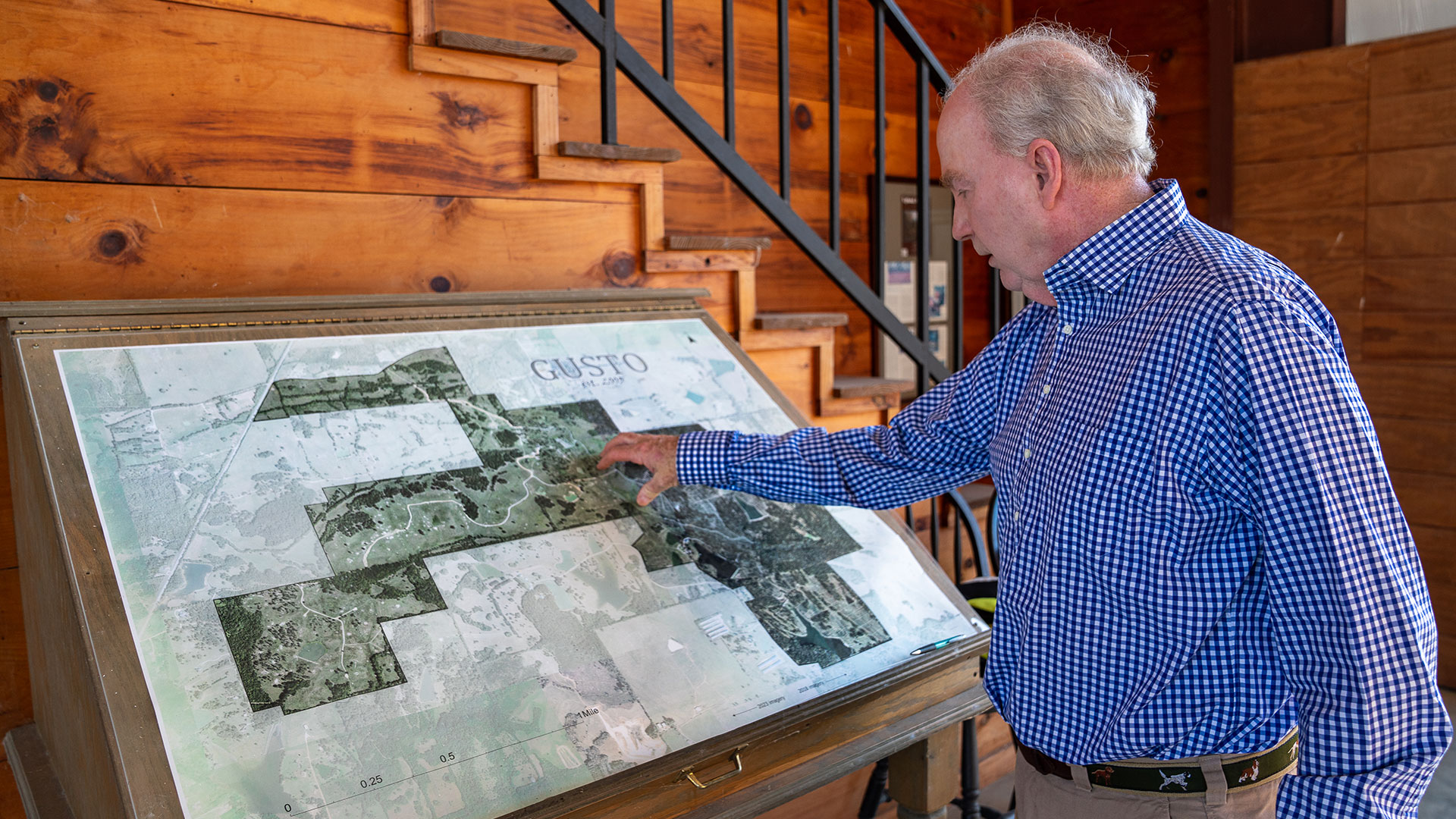
Purchased in 2004, Gusto wasn't a finished product. It was cattle pasture. A landscape like many others in the region – productive, but stripped of the complex habitat that bobwhites require.
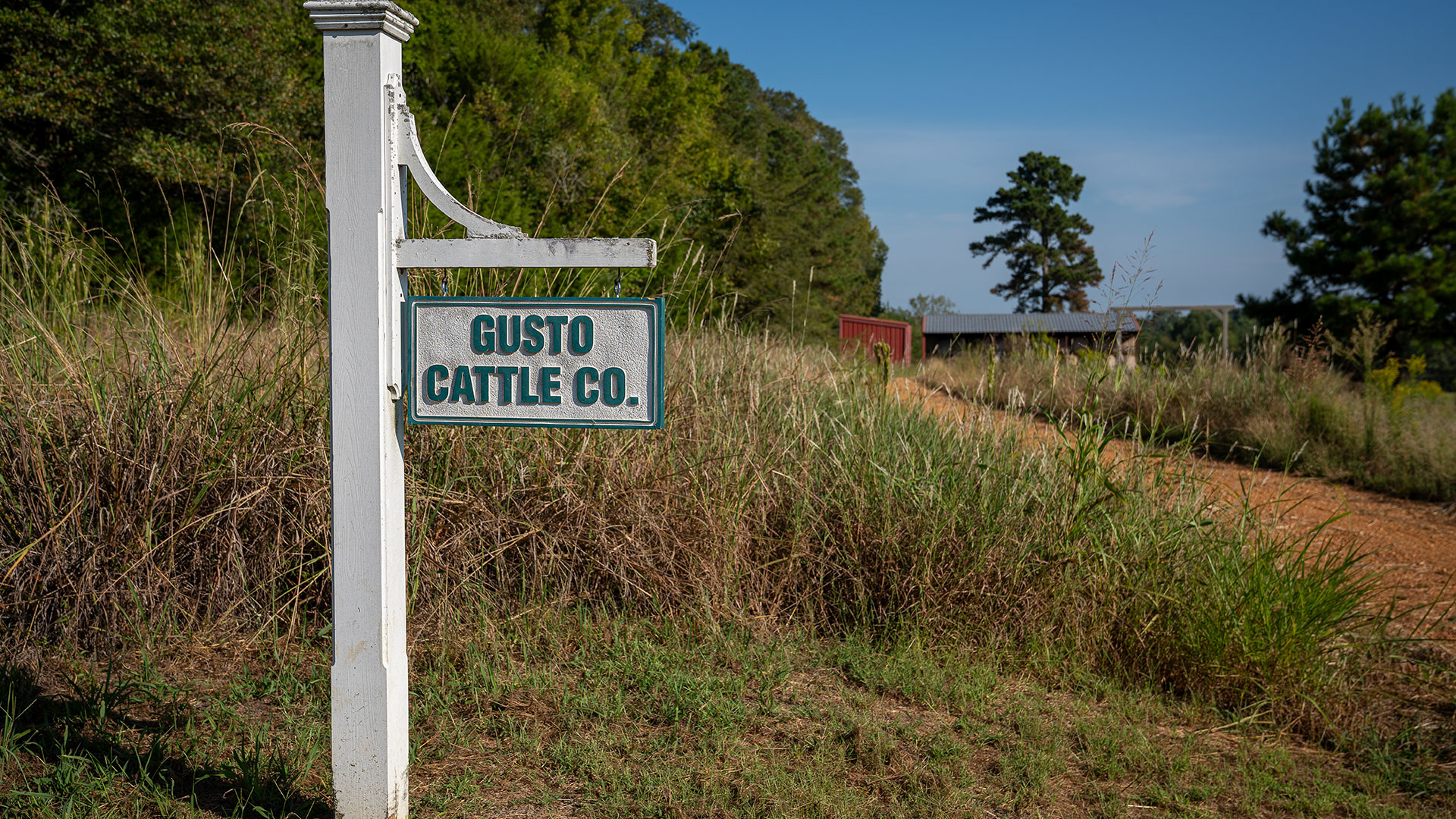
Over the next two decades, Harris began the long process of bringing it back with prescribed fire, timber thinning, and native grass restoration. That work continues today. Quail habitat is never finished; it is always a work in progress.
"There's 10 times more to do than what we're doing now," Harris says.
At Gusto, success isn't measured in birds bagged. It's measured in something harder to quantify.
When I asked Harris what a perfect day of quail hunting looks like to him, his response was telling.
"It's a safe hunt… a lot of fellowship… and watching the dogs," he says.
"It's really not about what you harvest … we just think the birds are so sacred."
That belief is built into Gusto's primary rule: only shoot the rise.
Harris' reasoning is practical. It keeps coveys intact, and maintains their primary survival tactic – strength in numbers.
Yet, it's also philosophical. It preserves the challenge and the integrity of the experience.
"If you let the birds go down together, then they stay together," he explains. More eyes and ears means stronger threat detection as the birds move through the landscape.
It's a small choice, made over and over again, that adds up to something larger: a version of quail hunting that looks a lot like it used to.
It is also a different version of what quail hunting has largely become in the region. Somewhere along the line, as wild birds declined and access tightened, a different form of quail hunting took hold – one built around pen-raised birds, released for predictable outcomes.
"I don't knock what other people do," Harris says. "They're at least introducing people to quail hunting."
But then he pauses.
"But that's not quail hunting to me. That's quail shooting."
It's not a criticism as much as a personal line in the sand.
At Gusto, the goal is something else entirely – to recreate the uncertainty, the difficulty, and the magic of wild birds.
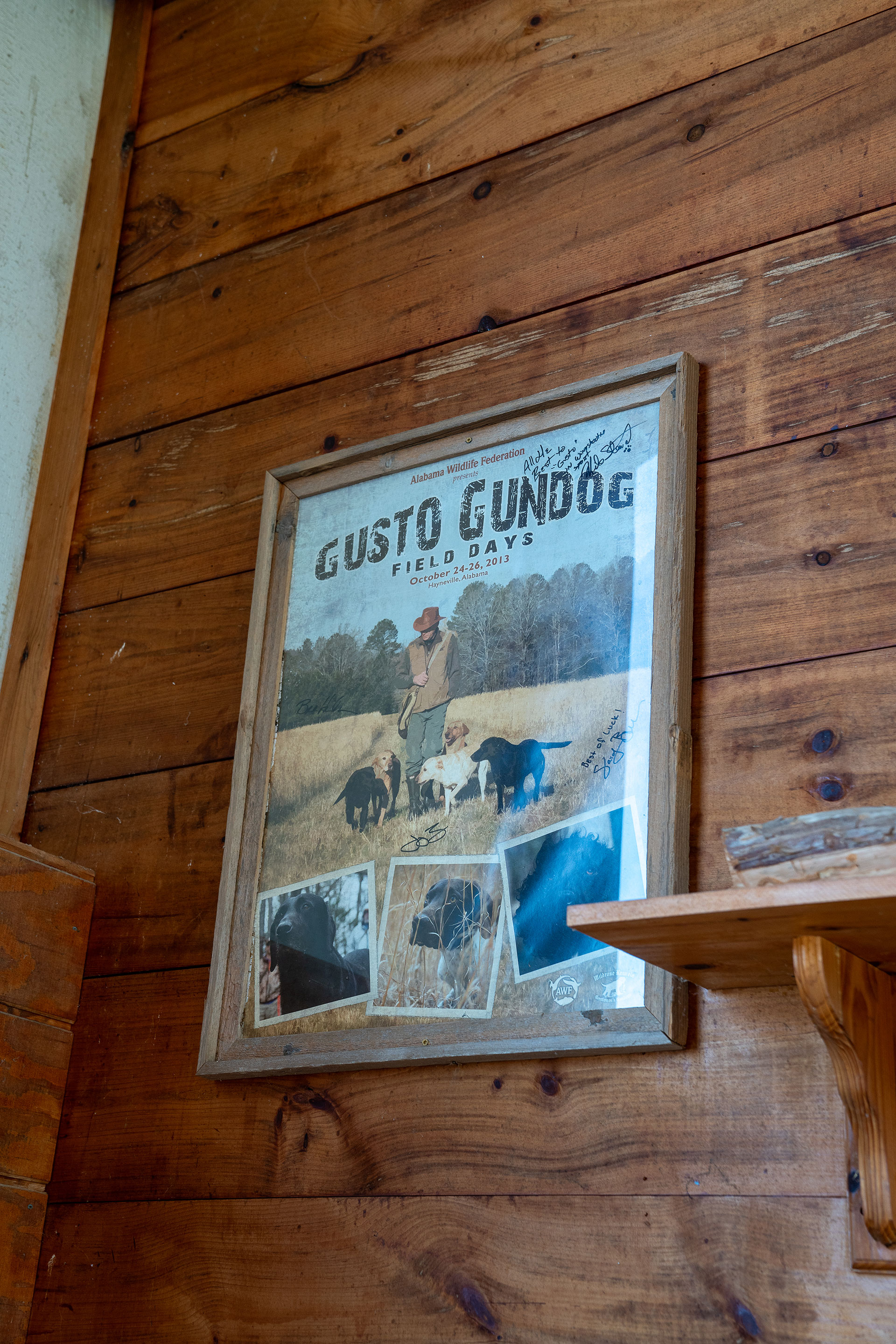
"I want people to come here and see what it was like when I was a boy," he says.
And when they do, something happens.
"They love it," Harris says. "And they want to come back. They want to keep experiencing wild quail."
That reaction, seeing people rediscover what quail hunting can be, is exactly the point. And for Harris, that mission doesn't end at Gusto's gate.
In 2009, he founded Alabama Black Belt Adventures, a nonprofit built on a simple premise: the region's future might depend on recognizing the value of what's already there.
"We had assets here," he says. "They were native assets. The hunting and fishing and outdoor lifestyle."
Traditional economic development models hadn't worked in the Black Belt. Industry was declining. Jobs were disappearing. Communities were shrinking. But the land remained.
"So I thought let's promote hunting and fishing and outdoor activities as an economic tool," Harris says.
The idea was conservation, tourism, and survival all in one.
Fast forward to today, and thanks to the efforts of Alabama Black Belt Adventures, hunting and fishing currently has an economic impact of around $3.8 billion and sustains more than 45,000 jobs in Alabama's Black Belt region.
That vision – tying habitat restoration to rural livelihoods – has become one of the defining ideas of Harris' life.
It's also why his influence extends well beyond Gusto. He's served on the national board of Pheasants Forever and Quail Forever and has been recognized as Alabama's Wildlife Conservationist of the Year. He's also been integral to organizations like the Alabama Wildlife Federation and Alabama Forest Land Trust. He's also helped create the Wetumpka Wildlife Arts Festival, an event that showcases the region's natural beauty and sporting heritage.
In 2024, he was inducted into the Alabama Business Hall of Fame, an acknowledgment of a career that, in many ways, has been about the same thing all along: investing in places, people, and the land that connects them.
Harris' impact also plays out in rooms far from the Black Belt. For decades, he's quietly worked to connect corporations to conservation, using his professional background and network to advocate for investment in habitat and community. He serves as an ambassador to business leaders across the country, making the case that conservation isn't just good stewardship – it's good business. It's work he rarely talks about, but those close to it describe a level of passion, urgency, and effectiveness that is unmatched.
That broader influence was recently recognized at home. In early 2026, Alabama House Joint Resolution 152 was signed, formally commending Harris for his contributions to business, conservation, and public service, including his service on the national board of Pheasants Forever and Quail Forever.
But titles and awards don't fully capture the work.
What Harris is really building is a case that conservation isn't just good for wildlife. It's essential for people.
Harris' calling is a familiar one to most people involved with Quail Forever. To love something is to care for it. Harris loves the land where he grew up. He sees its uniqueness, its beauty, and its challenges. He wants others to share his love for it. To have the same character-forming experiences he had. To make memories, similar to his own, that stem from the land.
And if restoring habitat were the only challenge, Harris would be optimistic.
Burn the woods. Thin the timber. Create the right habitat. Give quail and other wildlife what they need, and they'll come back.
"We have to bring them back. They are the chocolate kisses of the woods!"
But that's not the hard part. The larger problem is cultural.
"I would guess the majority of kids in Alabama and elsewhere… have never been on a gravel road," Harris says. "Fewer and fewer kids are getting outside and because of that we are losing the old values that come from the land."
It makes sense. Fewer kids outside. Fewer families connected to land. Fewer reasons to care about what happens to it.
"Fifty percent of kids don't go outside," he says.
That disconnect between people and place is, in Harris' view, the real threat.
"We've gone through generations where we've lost the battle of young people's minds," he says.
And unlike habitat, there's no prescribed management plan for that.
Part of the solution, Harris believes, is access.
When he was young, knocking on doors was enough to earn a day in the field.
"That opportunity is very scarce now," he says.
Without access, there's no experience. Without experience, there's no connection. And without connection, conservation becomes abstract, something that happens somewhere else.
"One of our missions is to be an advocate for more access," Harris says. "We've got to get kids outside so they can experience the same things my generation did growing up."
It's a simple idea. But it requires coordination between landowners, organizations like Quail Forever, and communities.
That means partnerships, education, and advocacy. It also means recognizing that private landowners are central to the solution. If we are going to save quail and win the minds of the next generation, private land must be part of the solution.
The work that Harris does at Gusto and elsewhere isn't just about quail. It's about soil, water, air, rural economies, mental health, and families.
"Everything we do for habitat affects soil, water, and air. It also has a ripple effect throughout the community." Harris says.
The same practices that help quail – fire, diversity, disturbance – also rebuild ecosystems. They create resilience. They reconnect people to something tangible. They create local businesses and become the backbone of local economies.
"It's important for quality of life… for mental health… for our youngsters," Harris says.
In that sense, quail become a gateway. A reason to care.
As my time at Gusto was coming to an end, I asked Harris what he hopes his legacy might be.
"I just hope my family continues to enjoy Gusto and share it. That's probably number one –sharing the experience with others."
He pauses, then adds, "What we've built here… my family believes in it. They'll carry it on."
It's a modest answer for someone whose work has shaped conservation across an entire region and beyond. But it fits because Harris' impact isn't just measured in acres restored, organizations founded, or formal awards. It's measured in moments, in covey rises, in that something lost might be found again.
And like any good covey rise, it starts with hope.

Your cart is empty