
Hunting & Heritage
|
08/26/2026
A Song in the Pines
Chuck Leavell’s Two Great Callings – Music and Conservation – Converge at Charlane Woodlands.
by Ryan Sparks
Related Articles


Noise has followed Chuck Leavell for most of his life.
It has thundered from festival stages and stadium speakers, blared through amplifiers, roared from crowds as he played in front of hundreds of thousands of people, and reverberated beneath his fingertips in studio recording sessions.
For more than half a century, Leavell has existed inside a level of musical grandeur few achieve – first as a young virtuoso with the Allman Brothers Band during the explosive rise of Southern rock, then as the indispensable keyboardist and musical director for The Rolling Stones, where his piano joined the music of arguably the greatest band of all time.

Leavell's career reads like a roadmap through rock, blues, soul, jazz, country, and beyond. Over the decades, he has played, toured, and recorded with many of the biggest names in music. Outside of The Rolling Stones, the Allman Brothers Band, and his own band, Sea Level, an abbreviated list includes: Eric Clapton, George Harrison, David Gilmour, John Mayer, The Black Crowes, Aretha Franklin, Dr. John, Gov't Mule, Train, The Roots, Widespread Panic, Blues Traveler, Lee Ann Womack, Eric Church, Montgomery Gentry, Charlie Daniels, and The Marshall Tucker Band … just to name a few.
Leavell's career has been built amid flashing lights, roaring crowds, and standing ovations. But on a plot of Georgia dirt called Charlane Woodlands, Leavell's life follows an entirely different rhythm.
Here, the noise fades.
At Charlane, the sounds are different. Wind through the pines. The crunch of boots on pine needles. The crackling snap of a prescribed fire as it rolls through the timber. The sweet and hopeful notes of a bobwhite quail.
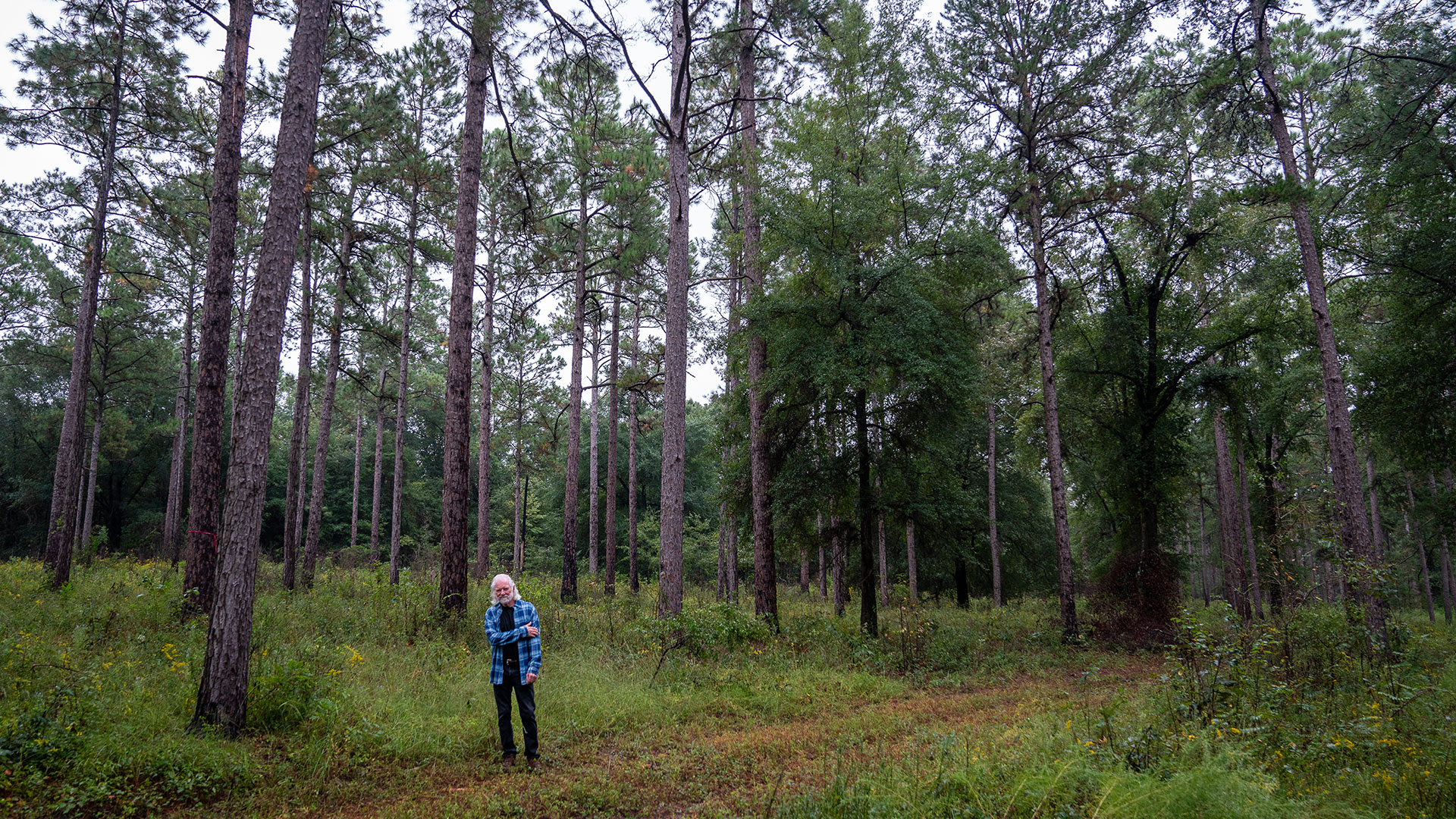
Leavell has quietly built another legacy here – one not measured in platinum records or sold-out tours, but in acres of restored and managed quail habitat.
"When I come home from touring and hear the wind in the pines rather than the hustle and bustle of big cities, that provides an incredible balance." Leavell says. "It keeps me grounded."
Balance is a defining concept of Chuck Leavell's life. Between celebrity and solitude. Between art and ecology.
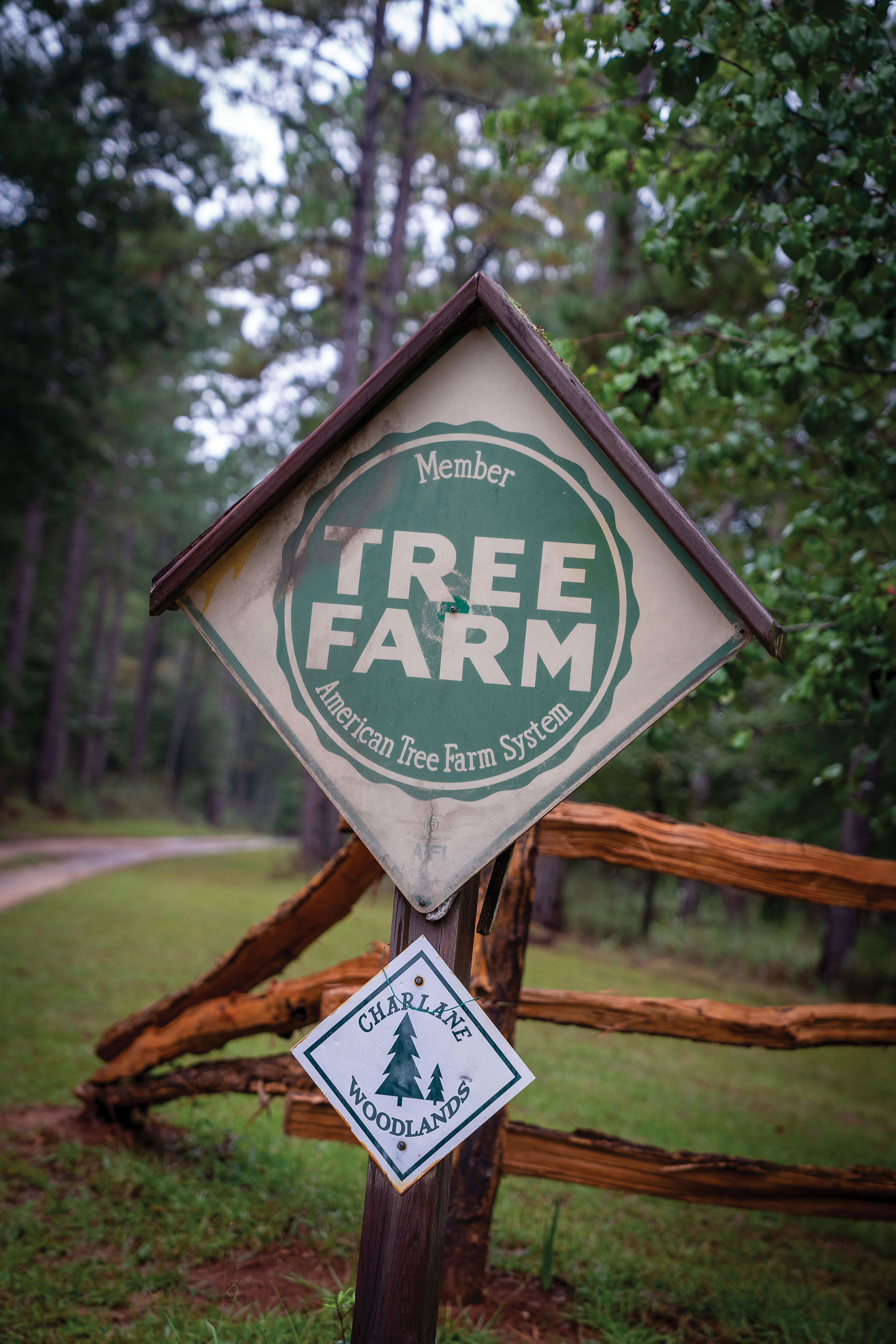
For all his musical success, Leavell is also a renowned forester and conservationist. He, and his wife, Rose Lane, have twice been awarded Georgia's Tree Farmer of the Year Award, and in 1999 they received the prestigious National Outstanding Tree Farmer of the Year Award.
At Charlane Woodlands, whose name is a fusion of his wife's and his own ("Char" from Charles and "Lane" from Rose Lane), he has spent more than 40 years proving that stewardship, like music, can be an enduring form of expression.
Leavell's journey into hunting began through Rose Lane's family, whose land in Georgia would ultimately transform his life.
When Leavell first came to Georgia in the late 1960s, he was a teenage musician chasing opportunity through Capricorn Records in Macon. He arrived with ambition, talent, and little else. Leavell hung around the studio pitching his skills, and his persistence gained him admission into the wild 1960s music scene. Rose Lane's family offered him something entirely different: connection to the land, tradition, and Southern outdoor culture.
That initiation came during a dove hunt.
Standing in a Georgia dove field with Rose Lane's Uncle "Baby Joe," he was startled when a covey of quail exploded nearby.
"I said, 'Joe, what was that?'" Leavell recalled. "And in his very country Georgia voice he said, 'Them birds, boy. You want to go bird hunting?"
"I said, 'I guess I do,'" Leavell remembers with a smile.
The next day, Uncle Joe arrived with bird dogs in the trunk of his car and shotguns in the back seat. In quail hunting, Leavell found grace, intimacy with the land, and a pathway to conservation.
Yet, his affection for hunting was never solely about the birds themselves.
"It's not so much about how many times you pull the trigger as it is being in the outdoors, having an appreciation for that, and watching the dogs. There is a spirituality to it."
That sense of appreciation would later define the way he approaches conservation.
By the early 1970s, Leavell's professional music career was accelerating rapidly. His work with the Allman Brothers Band established him as one of rock's defining musicians. His lyrical piano lines on songs like "Jessica" helped create the genre's iconic sound. Later, his decades with The Rolling Stones elevated him to international acclaim.
Yet amid the glamour and velocity of his musical ascent, Leavell's relationship with land and conservation was steadily deepening.
In 1981, Rose Lane inherited approximately 1,000 acres of family property in Twiggs County, Georgia, including the home place that would become Charlane Woodlands. Like many inheritors of significant landholdings, Chuck and Rose Lane faced difficult decisions about what to do with it.
Row crops were an option. Cattle remained possible.
But Leavell's thinking moved in another direction.
"I thought, 'where does the instrument that's giving you so much joy and such a great career come from?'" he asked himself. "It comes from the resource of wood."
Leavell's instrument, his career, his livelihood were all rooted in forests. Forestry, then, felt not just practical, but spiritual.
He chose trees. And the choice would fundamentally alter the course of his life.
Yet, Leavell did not romanticize landownership. He understood that meaningful stewardship required education, discipline, and hard work. He immersed himself in forestry, enrolling in correspondence courses and seeking guidance from experts. Over time, he transformed himself into a musician-forester, eventually receiving an honorary Forest Ranger Award from the U.S. Forest Service, an Honorary Masters of Forestry from the Warnell School at the University of Georgia, as well as several other honors for his forestry work.
"I still consider myself a student though," he said.
That "there's still more to learn" mindset has remained central to Charlane's evolution.
Today, Charlane Woodlands is not a place solely operated for timber value; it is a carefully managed mosaic of working forest, quail habitat, longleaf restoration, wetlands, and conservation easements. Leavell's management includes prescribed fire, invasive species control, timber thinning, and active restoration efforts that benefit not only quail, but broader biodiversity.
"People think natural lands are just natural – you don't have to do anything to them," Leavell said. "But that's not correct. It takes management. Lots of careful management."
This practical philosophy aligns closely with Quail Forever's mission. Bobwhites depend on disturbance-driven ecosystems, or what biologist call early successional habitat. Fire, edge habitat, native grasses and forbs are all essential for quail to prosper.
Leavell embraces that reality fully.
Over the years, Charlane has become an impressive model of Southern land stewardship. Roughly 350 acres of longleaf pine have been reintroduced, restoring an ecosystem that once defined the Southeast. Leavell has also participated in American chestnut restoration efforts, adding another layer of investment in conservation.
Through multiple conservation easements, he has sought to ensure that large portions of Charlane remain intact, resisting the fragmentation and development pressures that increasingly define the modern South.
"I do not like the idea of seeing a housing development on any of our lands," he said.
For Leavell, the land is not merely property. It is legacy. It is conservation as vocation.
At the same time, Leavell understands that private-land stewardship must remain economically viable. Timber production, pine straw harvesting, and boutique quail hunting all play important roles in sustaining Charlane's long-term ecological and economic viability.
His approach reflects one of the most important truths in conservation today: working lands often survive precisely because they work.
Rather than separating ecological values from economic realities, Leavell has found ways to align them.
His quail operation, developed through renovated historic structures and a lodge largely built from Charlane's own timber, supports both habitat management and financial sustainability while preserving the property's diverse habitat.
That same measured approach defines his broader conservation advocacy.
Beyond Georgia, Leavell has become one of America's most visible ambassadors for sustainable forestry and land ethics. Through books, documentaries, his television program ("America's Forests" on PBS and Amazon), and speaking engagements, he has championed stewardship and conservation-minded land use.
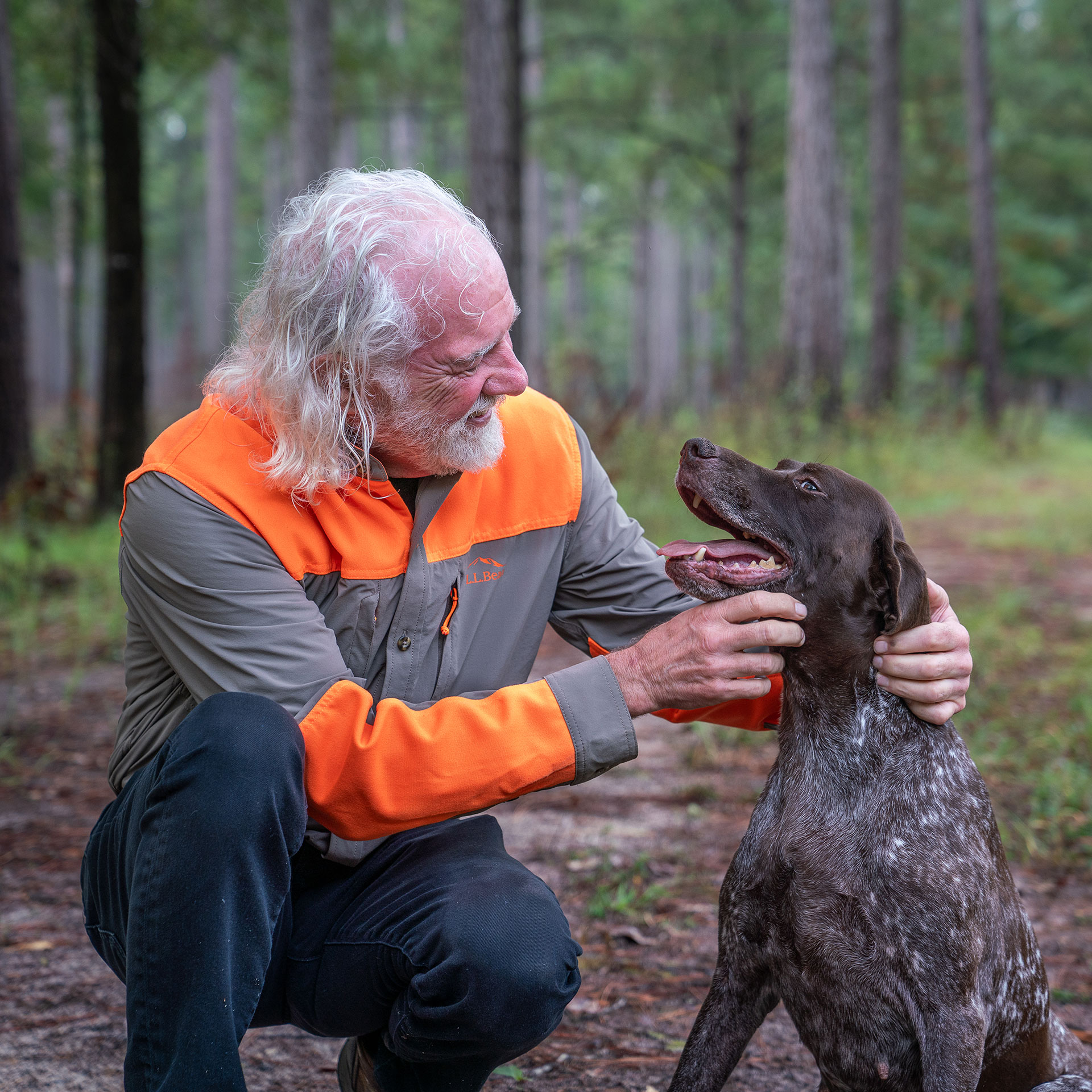
Few public figures possess Leavell's ability to bridge worlds. He can speak to hunters, conservationists, and foresters with authenticity while also reaching a broader public audience through his cultural cachet.
In this way, Leavell uses his fame not merely to entertain, but to educate.
"It's very important to reach children," he said. "You want them to start thinking about these conservation issues early, and that's why I wrote my children's book, The Tree Farmer."
That generational mindset mirrors the very best of conservation philosophy. Great stewardship is rarely about immediate reward. It is about building something that outlasts you.
"In the woods, we return to reason and faith," he says, referencing his favorite quote from Ralph Waldo Emerson.
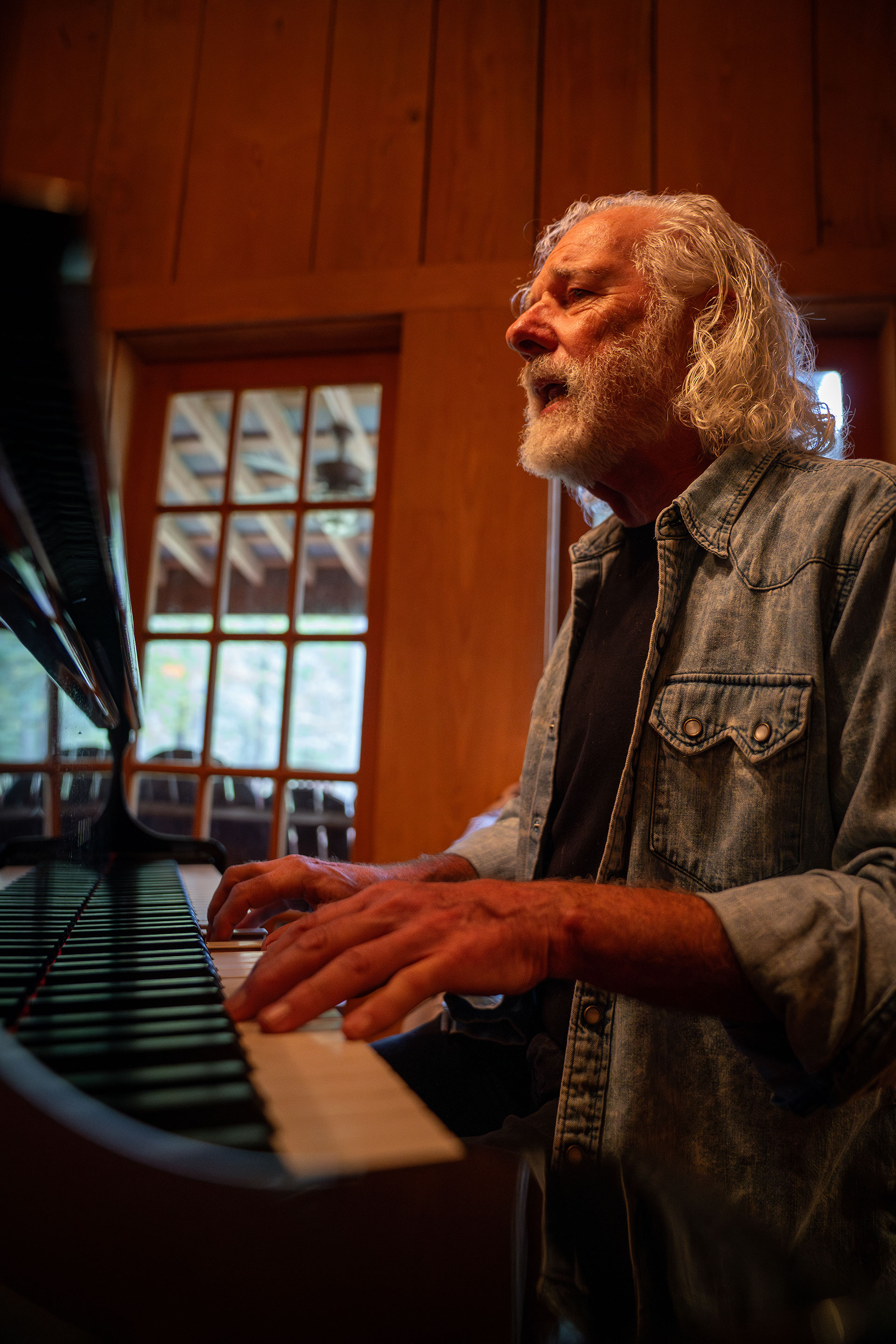
Chuck Leavell has lived two extraordinary lives – one in music, one on the land – and in both, he has pursued excellence with uncommon discipline and purpose.
His career has produced songs that may endure indefinitely. His conservation-ethic has produced healthy forests and habitat that may prove just as lasting.
There is a sense of permanence in both music and in the land.
"When you write a song," Leavell said, "that's forever."
The same, he believes, can be true of land and habitat.
Chuck Leavell may likely be remembered as one of rock's great keyboardists, but at Charlane Woodlands, Leavell's greatest composition may not be played on piano keys at all, but in the two-note song of a bobwhite, echoing through the pines.
Special thanks to Bob Purtell, Principal at Pinpoint-Direct and a longtime partner in PF & QF's membership mailing campaigns, for helping make the connection for this story.

Your cart is empty